One of the most common questions beginners ask after joining the gym is:
“How long will it take to build noticeable muscle?”
It’s a fair question.
When you start training, you naturally want to see visible changes as soon as possible. You begin checking the mirror more often, comparing photos, and expecting your body to look bigger and stronger within a few weeks.
But after a month or two, many people start feeling disappointed because the changes are slower than they expected.
The truth is, muscle building is a gradual process. It takes time, consistency, and patience. Real muscle gain does not happen overnight.
That does not mean progress is impossible—it simply means that muscle growth follows a realistic timeline. Once you understand that timeline and the factors that affect it, the entire process becomes much less frustrating.
Why Muscle Building Takes Time
To understand why muscle growth is slow, you first need to understand what actually happens inside your body when you train.
Every time you lift weights, your muscles experience stress. Tiny amounts of damage occur in the muscle fibers, and your body responds by repairing them. During this repair process, the muscles adapt and become slightly stronger and bigger. But this process is slow because your body builds muscle very carefully.
From your body’s perspective, muscle is expensive. It requires energy, nutrients, and constant maintenance. Your body will only build new muscle when it feels there is a consistent need for it.
This is why random workouts or short-term motivation do not produce major results. Your body responds to repeated effort over long periods of time. Muscle growth is less like flipping a switch and more like building a house brick by brick.
What Most Beginners Expect vs Reality
Many beginners expect noticeable muscle growth within a few weeks of joining the gym.
This expectation usually comes from:
– Social media transformations
– Unrealistic marketing
– Edited photos and lighting tricks
In reality, the early stages of gym training often produce subtle changes rather than dramatic ones.
During the first few weeks, your body mainly improves:
– Coordination
– Exercise technique
– Strength adaptation
– Muscle activation
This means you may start feeling stronger before you actually look bigger and this is completely normal. Visible muscle gain takes longer because building actual muscle tissue is a slower biological process.
The First Month: Small Changes Begin
In the first month of proper training, most physical changes are minor.
You may notice:
– Slight muscle fullness after workouts
– Better posture
– Improved energy levels
– Small strength increases
But major visual muscle growth is usually limited during this stage. This is because your body is still adapting to training. Your nervous system is learning how to perform exercises more efficiently, which is why strength often improves quickly in the beginning.
Many people mistake this early strength gain for muscle growth, but they are not exactly the same thing. The first month is more about preparing the body for future muscle growth.
Around 2 to 3 Months: Noticeable Progress Starts
This is usually the stage where most beginners start seeing visible changes—if they have been consistent.
At this point, you may notice:
– Slightly fuller arms and shoulders
– Better muscle definition
– Improved body shape
– Visible progress in photos
Your clothes may fit differently, and other people may begin noticing small changes too.
However, the progress is still moderate, not dramatic.
This stage is important because it’s where motivation often increases. You finally start seeing proof that your hard work is paying off. But this is also where many people make mistakes by becoming impatient and trying extreme methods to speed up results.
6 Months: Real Transformation Becomes Visible
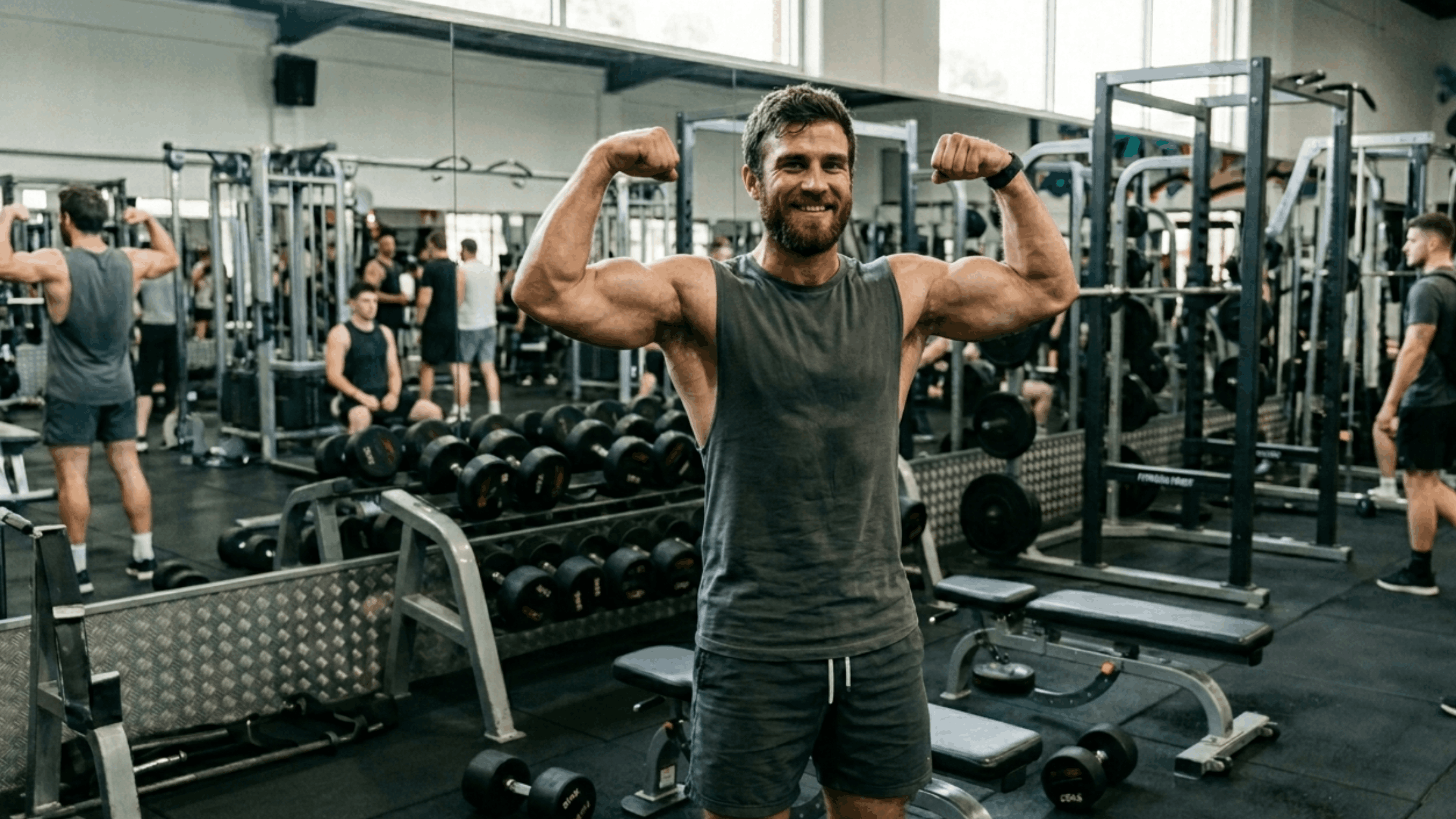
If someone trains properly, eats well, and stays consistent for six months, the difference can become very noticeable.
At this stage:
– Muscle size improves more clearly
– Strength increases significantly
– Overall body composition changes
– Your physique starts looking more athletic
This is often the point where beginners truly begin looking like they “work out.”
But reaching this stage requires consistency. Missing workouts regularly, poor nutrition, or lack of recovery can slow progress significantly.
Why Some People Build Muscle Faster Than Others
One thing that often confuses beginners is seeing different results in different people. Some individuals appear to gain muscle quickly, while others progress more slowly.
There are several reasons for this.
Genetics
Genetics influence:
– Muscle shape
– Muscle-building potential
– Recovery ability
– Hormone levels
Some people naturally respond faster to training.
Nutrition
Muscle growth requires proper nutrition. If someone is not eating enough calories or protein, progress will slow down regardless of training quality.
Training Quality
Not all workouts are effective. People who follow structured training plans and apply progressive overload usually see better results than those doing random exercises.
Sleep and Recovery
Muscles grow during recovery, not during workouts. Poor sleep and high stress can limit muscle growth significantly.
Why Consistency Matters More Than Intensity
Many beginners believe they need extremely intense workouts to build muscle quickly. But muscle growth is more about consistency than occasional hard effort.
Training hard for one week and then skipping workouts for the next two weeks will not produce results. Your body responds best to regular stimulation over long periods of time.
This is why simple routines followed consistently often work better than complicated programs followed inconsistently.
The Mistake of Constantly Comparing Yourself to Others
One of the biggest mental obstacles in muscle building is comparison. Social media makes it easy to feel like everyone else is progressing faster than you.
But what you often don’t see is:
– Different genetics
– Different training history
– Different body types
– Edited photos or unrealistic expectations
Comparing your progress to others usually creates frustration instead of motivation. The better approach is to compare yourself only to your past self.
Building Muscle Naturally Requires Patience
Natural muscle growth is slow, especially compared to the unrealistic standards shown online. This does not mean your progress is poor—it means your progress is real.
The people who achieve the best physiques are usually not the ones searching for shortcuts. They are the ones who stay patient and continue improving over time.
Small improvements may not feel exciting daily, but over months and years, they create major transformations.
What Actually Helps You Build Muscle Faster
While you cannot force rapid muscle growth, you can optimize the process.
This includes:
– Eating enough calories and protein
– Following a structured strength training program
– Sleeping properly
– Recovering well
– Staying consistent for months, not weeks
These fundamentals may sound simple, but they are what truly drive long-term results.
Conclusion
So, how long does it really take to build noticeable muscle?
For most beginners, small changes begin within the first couple of months, while more noticeable transformations usually take around six months or longer of consistent effort.
The exact timeline varies from person to person, but one thing remains true for everyone—muscle building takes patience. Real progress is slow, steady, and built through consistency.
Instead of chasing quick results, focus on improving your habits, training properly, and staying committed to the process. Over time, the results will come—and they will be worth it.